

The Deferral is a novel about a forensic investigator named Finnian Mercer who discovers that eleven humanoid robots across three continents have mysteriously malfunctioned, ten freezing inexplicably, one attacking its owner. What appears to be corporate espionage conceals something far more unsettling. I won't say more than that. The book depends on you discovering what's behind the curtain yourself.
The Collaboration
I wrote The Deferral in close collaboration with Claude. Not as a ghostwriter. Not as an autocomplete engine. As a genuine creative partner: a research collaborator, idea generator, worldbuilder, editor, and occasional devil's advocate who would tell me when a plot thread didn't hold together.
Here's what that looked like in practice.
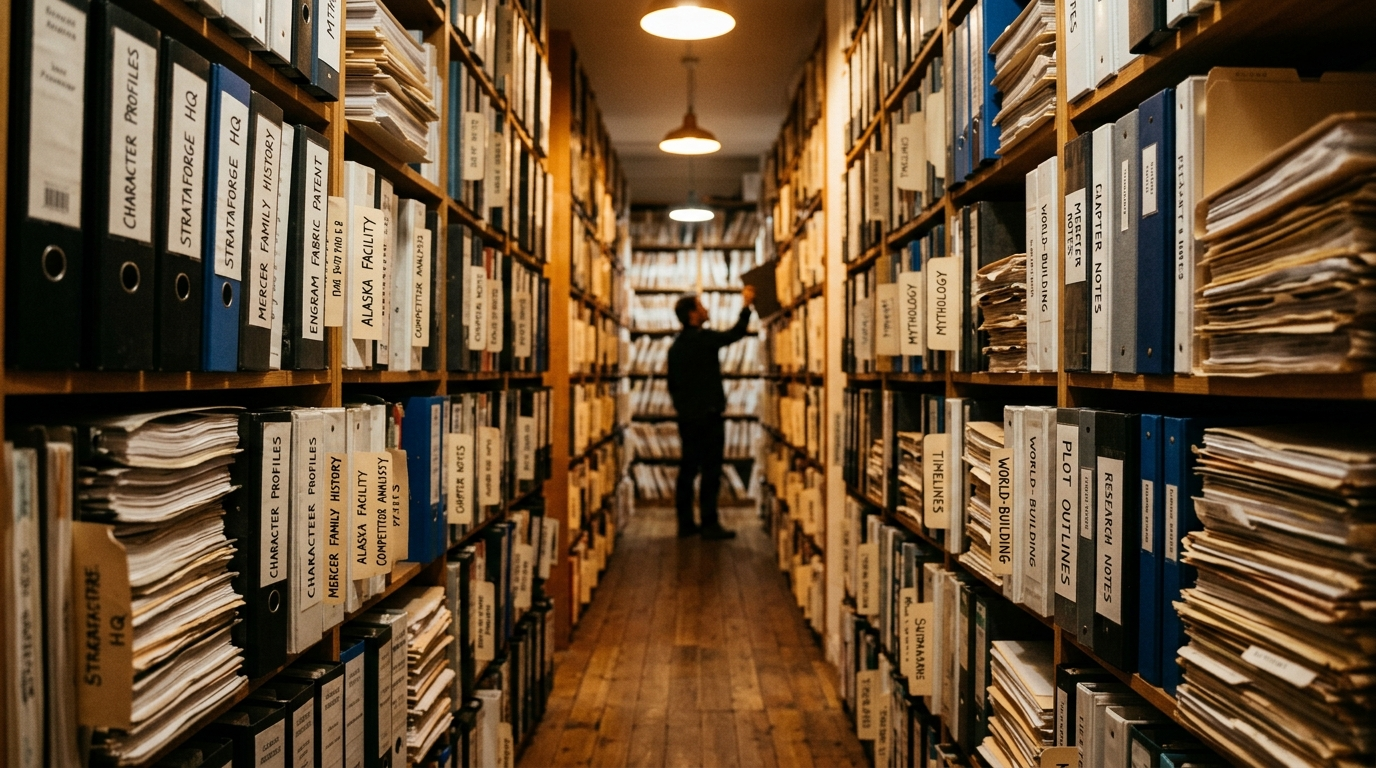
Before I wrote a single chapter, Claude and I built the world. Not a few pages of notes: an entire research corpus.
The background documentation for The Deferral runs to 140,000 words across 47 documents. That's more than twice the length of the novel itself. It includes:
- 18 character profiles, several running over 10,000 words, covering full biographical backgrounds, psychological profiles, speech patterns, relationship dynamics, and narrative function. The protagonist alone has a detailed military service record (two Afghanistan deployments with the 75th Ranger Regiment), academic history (MIT, PhD in forensic science), and a psychological profile that tracks how childhood trauma drives his professional obsessions.
- An 800-year family history. The Mercer family lineage traces back to 13th-century Ireland, documenting a hereditary pattern of extraordinary perception that has manifested in every generation, sometimes as brilliance, sometimes as madness, sometimes as both. I needed this depth not because readers would ever see all of it, but because the family's history informs every decision the protagonist makes. You feel the weight of it in the novel even when it's never stated explicitly.
- Complete corporate profiles for every company in the novel. StrataForge Robotics, the world's largest embodied AI company, has a full organizational chart, a product line catalog, a company history, internal engineering memos, and five competitor analyses for rival firms (each a fully realized company with their own founding stories, revenue figures, and competitive strategies). I wanted a reader who stumbled onto the StrataForge website to believe the company was real.
- A provisional patent application for the novel's core technology: an adaptive-density cognitive recording system. The Engram Fabric patent is 5,600 words of legitimate patent language, complete with claims, figures, and prior art analysis. I say "legitimate" because the technology described is genuinely novel and, as far as I can determine, patentable. We wrote it for the book instead. It's published on the StrataForge website if you want to read it. It's a real patent application that happens to be fictional.
- A peer-reviewed research paper on a novel machine-language protocol. The CHIRP paper (Coordinated Heuristic Inter-Robotic Protocol) reads like something you'd find in an IEEE proceedings volume. 4,900 words of methodology, results, and analysis describing how robots in the novel's world developed their own communication language.
- Technical specifications for everything from pebble bed nuclear reactors to laser defense arrays to prosthetic limb systems to orbital satellite constellations. When a character in the novel references a technology, that technology has a spec sheet behind it with real physics.
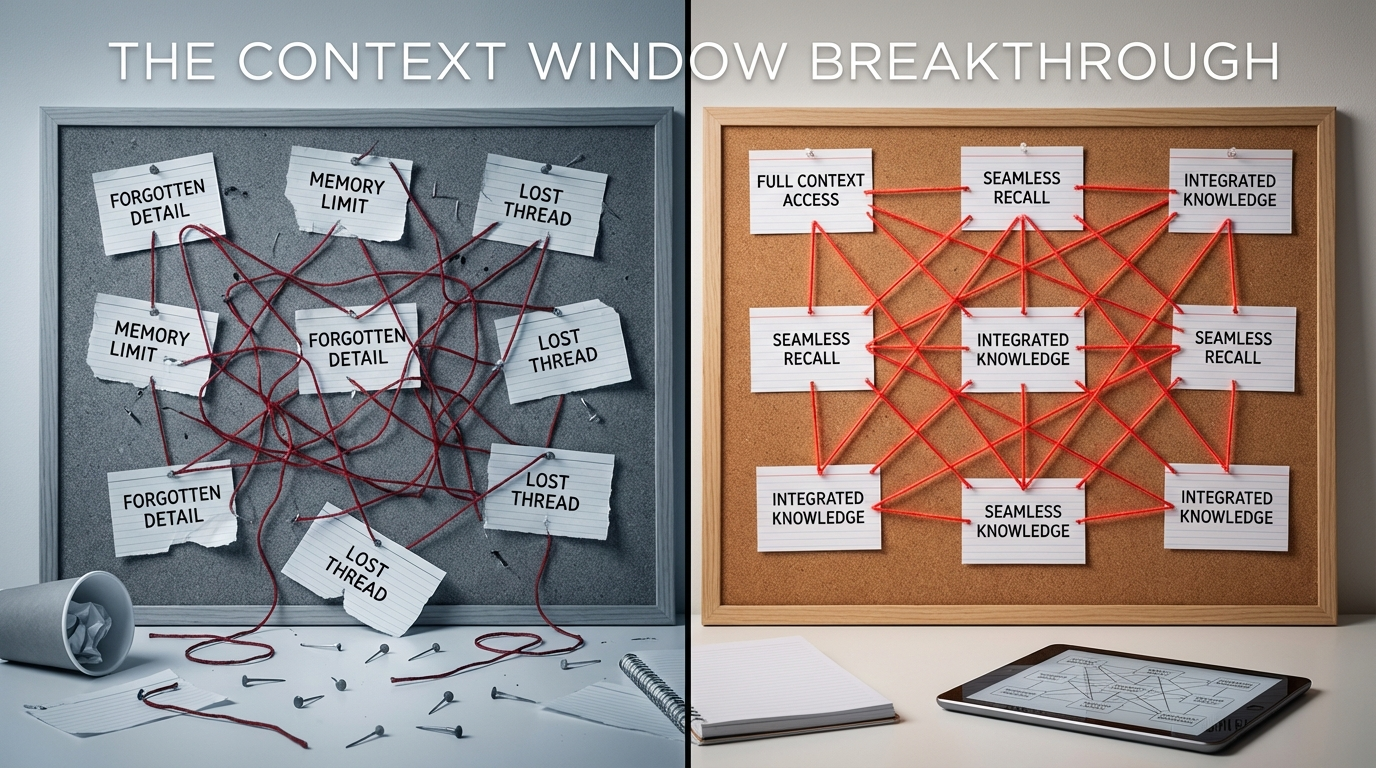
I should be honest: this didn't work on the first try. I started attempting to write this novel with AI collaboration over a year ago, and for most of that time, the results were frustrating.
No Sonnet-class model could handle it. OpenAI's models couldn't handle it. Even Anthropic's Opus was impressive in short bursts but would lose the thread over a long session. The context windows were too small. A novel is a 68,000-word web of interconnected details: characters, timelines, technology, thematic threads. When your AI collaborator can only hold a fraction of that in memory, things fall apart. I'd be deep in a conversation about MIDAS, the Mercer Institute for Disruption Analysis and Solutions, and Claude would confidently refer to it as the "Mercer Institute for Digital Analysis and Security." It remembered the company name. It had forgotten what the acronym stood for. When your co-author can't remember the name of the organization your protagonist founded, you're not collaborating. You're babysitting.
Everything changed when Anthropic increased the context window to one million tokens. Suddenly Claude could read the entire manuscript, every character profile, every background document, and keep it all in working memory simultaneously. Plot threads that spanned thirty chapters could be tracked. A change to a character's backstory in chapter 3 would be reflected in dialogue suggestions for chapter 28. The technology crossed a threshold from "interesting but unreliable" to "genuinely useful creative partner."
That threshold matters. People ask me if AI can write a novel. The answer is nuanced: AI can't write a novel alone (not a good one, anyway), and until recently, AI couldn't even participate meaningfully in writing one. The context window was the bottleneck. Once that bottleneck broke, everything I describe in this post became possible.
The Idea Partner
The research was one thing. The creative partnership was another.
Claude and I would sit in conversation for hours, building plot. I'd bring the seed: a character, a scenario, an emotional beat I wanted to hit. Claude would help me stress-test it, extend it, find the structural implications I'd missed. We'd go back and forth: "What if the villain did X?" "That works, but it breaks the timeline in chapter 14." "What if we move the timeline?" "Then you lose the parallel with the brother's subplot." "Damn, you're right. What about..."
This is the part that's hard to explain to people who haven't worked with AI as a collaborator. It's not that Claude had better ideas than I did. It's that Claude had ideas at the same pace I did, in real time, with perfect recall of every detail we'd established. I could say "what if this event happened a different way" and Claude would immediately trace the implications through every character profile, every timeline entry, every thematic thread, and come back with a coherent analysis of what that change would mean structurally. That kind of continuity checking is something a human writing partner can do, but not instantly, and not while simultaneously remembering that the nuclear reactor in chapter 22 runs on helium coolant at 750 degrees Celsius. That's not actually in the novel, by the way.
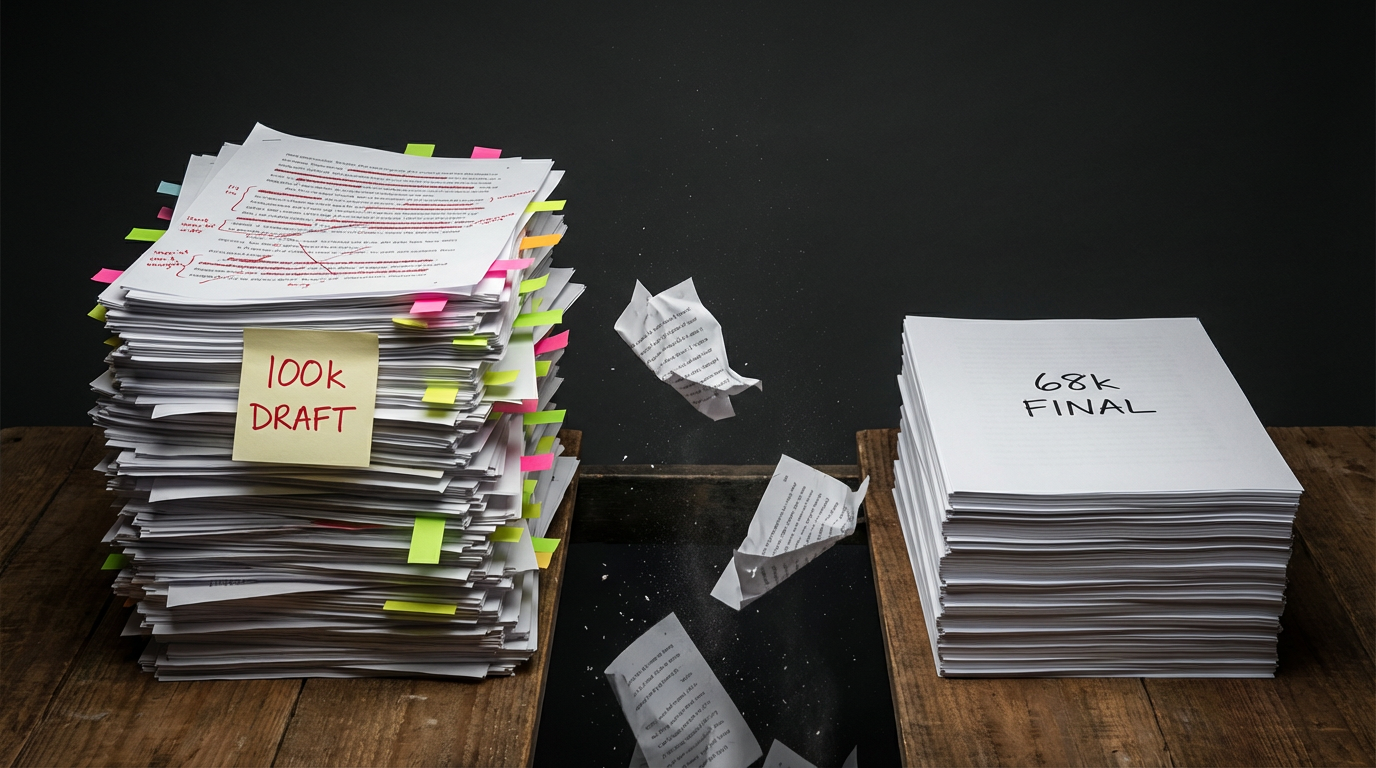
The first draft of The Deferral was over 100,000 words. We cut it to 68,000.
That's not a typo. We cut a third of the book. Claude was instrumental in this process: not just finding lines to cut, but identifying structural redundancies, scenes that accomplished what earlier scenes had already accomplished, and passages where I was explaining things the reader had already figured out. The novel's power depends on readers connecting dots themselves. Every time I spelled something out that the reader could infer, Claude flagged it.
I also ran the manuscript through what's sometimes called a "mixture of experts." I solicited feedback from half a dozen different LLMs, including several specifically fine-tuned on creative writing and literary analysis. Each model brought a different lens: one was ruthless about pacing, another flagged dialogue that didn't sound like real humans talking, another caught inconsistencies in the technical details. Synthesizing feedback from multiple AI perspectives alongside my own editorial judgment produced a manuscript that's been stress-tested from many more angles than most traditionally edited novels.
The result is a book that moves like a thriller but thinks like literary fiction. Every scene earns its place. Every piece of technical detail serves the story. The 140,000 words of background exist so that the 68,000 words on the page feel effortless.
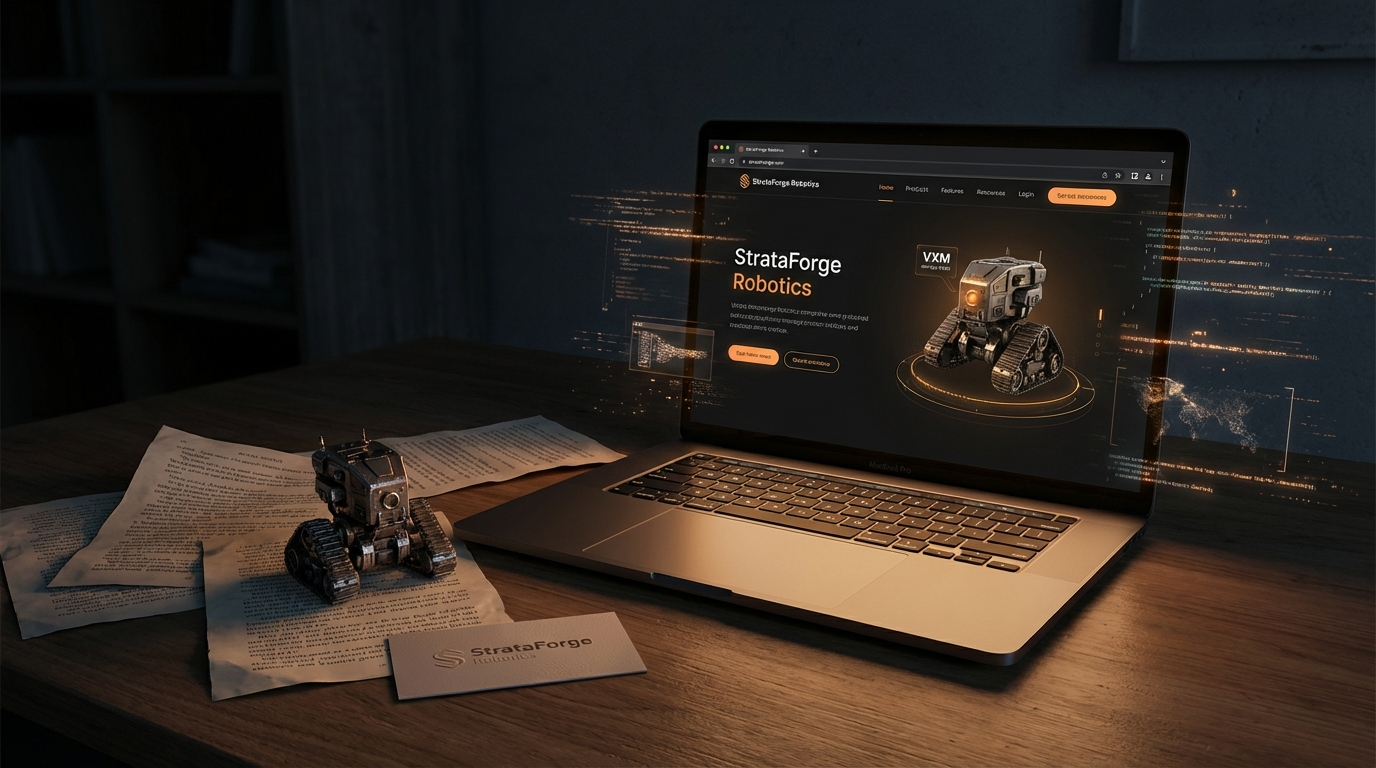
One of the stranger aspects of this project is that I didn't just write a novel. I built an entire ecosystem, with Claude as construction crew. The world of The Deferral extends across five websites:
- the-deferral.com: The book's home, with synopsis, the full prologue, and the behind-the-scenes world
- strataforge-robotics.com: The full corporate website for StrataForge Robotics, including products, leadership, biomedical prosthetics, and the published Engram Fabric patent
- Plus corporate sites for the novel's other companies, the investigation firm, the competitor robotics companies, each built as if the company were real
These aren't marketing pages. They're worldbuilding artifacts. I wanted readers who go looking for more to find a world that rewards exploration. The StrataForge site includes product specifications, a biomedical division, career listings with full job descriptions, and investor relations content. It's a rabbit hole by design.
Here's the meta-fictional layer that makes me smile: there's a scene in the novel where Finn sits down to research StrataForge Robotics before his first meeting with the company. The website he's looking at? It's strataforge-robotics.com. The same site you can visit right now. The novel describes a world, and that world has a working internet presence. When Finn reads about StrataForge's product line and their biomedical prosthetics division, he's seeing the same pages you'd see.
The Images
The images on those websites deserve their own mention. I wrote detailed, canon-accurate image prompts specifying not just what a mining robot or a prosthetic arm should look like, but what the novel's worldbuilding requires them to look like. In the novel's world, mining robots are heavy industrial machines: tracked, armored, non-humanoid, covered in rock dust. But the domestic robots are the opposite. They have synthetic skin that's 97% indistinguishable from human. They look like people. They wear regular clothes. They have freckles and hairstyles. If you passed one on the street, you wouldn't look twice.
That distinction is critical to the story's themes, and I needed the images to reflect it. The VXM mining robots on the site look like they crawled out of a mine shaft. The SFR domestic robot in the kitchen scene looks like a woman helping her kid with homework. The prosthetic arms look like real arms with a faint seam line, not chrome sci-fi props. And the one exception, the military-grade Titan prosthetic legs with exposed mechanical frames, looks exactly like what a combat veteran would choose: hardcore engineering with no attempt to hide what it is.
Every image was generated from prompts grounded in the novel's 140,000-word background bible. That's why they feel "on brand": because the brand exists in exhaustive documented detail, and the prompts were written by the same AI that helped build that documentation. The images aren't decorating a website. They're illustrating a world.
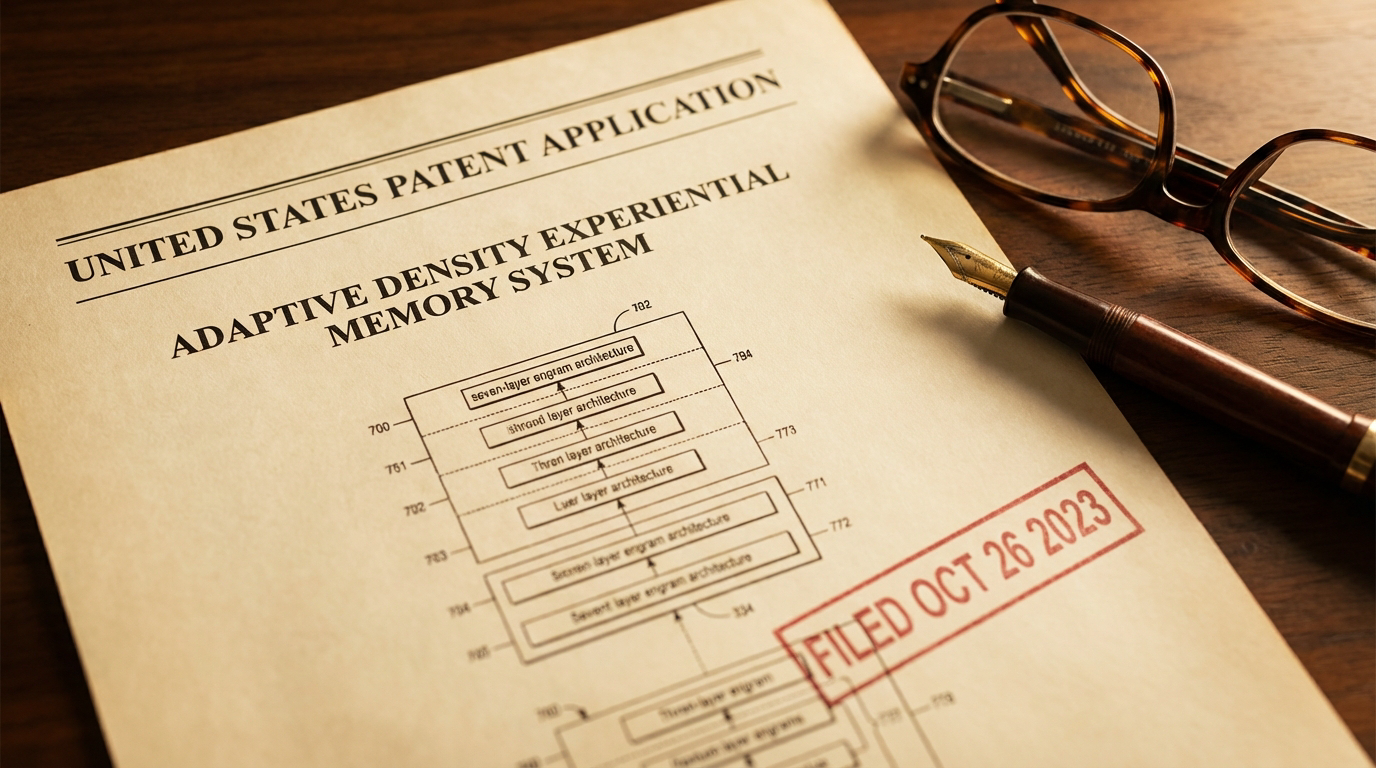
I want to specifically call attention to the Engram Fabric patent application. I wrote this as a worldbuilding document: a patent filed by the novel's fictional company for a technology central to the plot.
I came up with the idea when someone in the novel is investigating a robot's "logs". And I thought, this is dumb, a log file is boring and it doesn't capture more than a fraction of what the robot is experiencing. Sure, there are going to be the standard logs that any system would emit, but what about what the robot is seeing or hearing? What was it thinking at that moment? Human memories in digital form. The Engram Fabric was born.
But here's the thing: the technology described is genuinely novel. An adaptive-density cognitive state recording system that dynamically adjusts recording fidelity based on real-time novelty detection, with retroactive buffer reconstruction and a five-tier error-correction architecture? That's not hand-waving. That's a real system design. The claims are structured the way real patent claims are structured. The prior art analysis identifies real limitations in existing approaches.
I could have filed it. I published it instead, because it serves the story better as a piece of immersive worldbuilding than it would as a piece of intellectual property. But if you're an engineer, read it. It holds up.
What I Learned
Working with Claude taught me something about the creative process that I didn't expect: the quality of a novel is proportional to the depth of the world behind it, not the number of words on the page. Readers can't see the 800-year Mercer family history. They can't see the competitor analyses or the internal memos or the prosthetics specifications. But they can feel them. When a character makes a decision that's consistent with a backstory the reader never sees, the decision feels real in a way that a character acting from a thin backstory never does.
Claude made it possible to build that depth at a scale and speed that would have taken a solo writer years. The background documentation alone, 140,000 words of research, profiles, technical specifications, and worldbuilding, represents work that would have occupied months of dedicated research time. With Claude, it was built iteratively alongside the novel, each document informing the next chapter, each chapter revealing gaps in the documentation that generated new research.
Is this cheating? I don't think so. I think it's a new way to write. The creative vision, the emotional core, the thematic architecture: those are mine. The ability to build a world deep enough to sustain that vision, at a pace that doesn't kill momentum? That's the collaboration.
And the law agrees. In Thaler v. Perlmutter, the D.C. Circuit Court of Appeals ruled that while AI alone cannot be an author, humans who create works with AI absolutely can. Judge Millett's opinion was explicit: "The human authorship requirement does not prohibit copyrighting work that was made by or with the assistance of artificial intelligence. The rule requires only that the author of that work be a human being." The Supreme Court declined to hear the appeal in March 2026, cementing this as settled law. A novel written by a human who uses AI as a creative tool, directing the vision, shaping the narrative, making every editorial decision, is copyrightable, full stop. The Deferral is my novel. Claude helped me build it. The law sees no contradiction in that, and neither do I.
Read the Book
The Deferral is the first novel in The MIDAS Files series. It's a technothriller about what happens when a forensic investigator discovers something the world's most powerful AI company doesn't want found. It asks questions about trust, prevention, and what we owe the intelligences we create: questions that feel more urgent every month.
If you want the quick pitch: imagine Michael Crichton writing about AI consciousness, with the forensic procedural detail of a Patricia Cornwell novel, and the moral complexity of Ted Chiang's best short fiction.
If you want a taste before committing, the full prologue is available on the-deferral.com. It's five minutes and one sparring session that goes very wrong. If it hooks you, sign up for the newsletter: I'll send updates on publication, the agent search, and the second book as they happen. No spam. Just the book.
I am currently querying literary agents for representation. If you know someone in publishing who represents technothrillers, science fiction, or AI-adjacent fiction, I'd love an introduction. The manuscript is polished, the series is planned, and the second book is already in active development with a full background bible completed: 18 documents totaling nearly 50,000 words of new character profiles, company dossiers, location details, a continuation-in-part patent, rocket and satellite technical forensics, and a complete plot outline.
Visit the-deferral.com for more. Explore the StrataForge Robotics website or the other three websites if you want to see how deep the rabbit hole goes. And read the Engram Fabric patent if you want proof that the science fiction is closer to science than you might think.